
I can never resist a tray of tender spinach and ricotta ravioli, especially when they’re finished in silky sage butter. Homemade, freezer-friendly, and worthy of Sunday dinner or Christmas, these little pasta parcels always disappear fast.
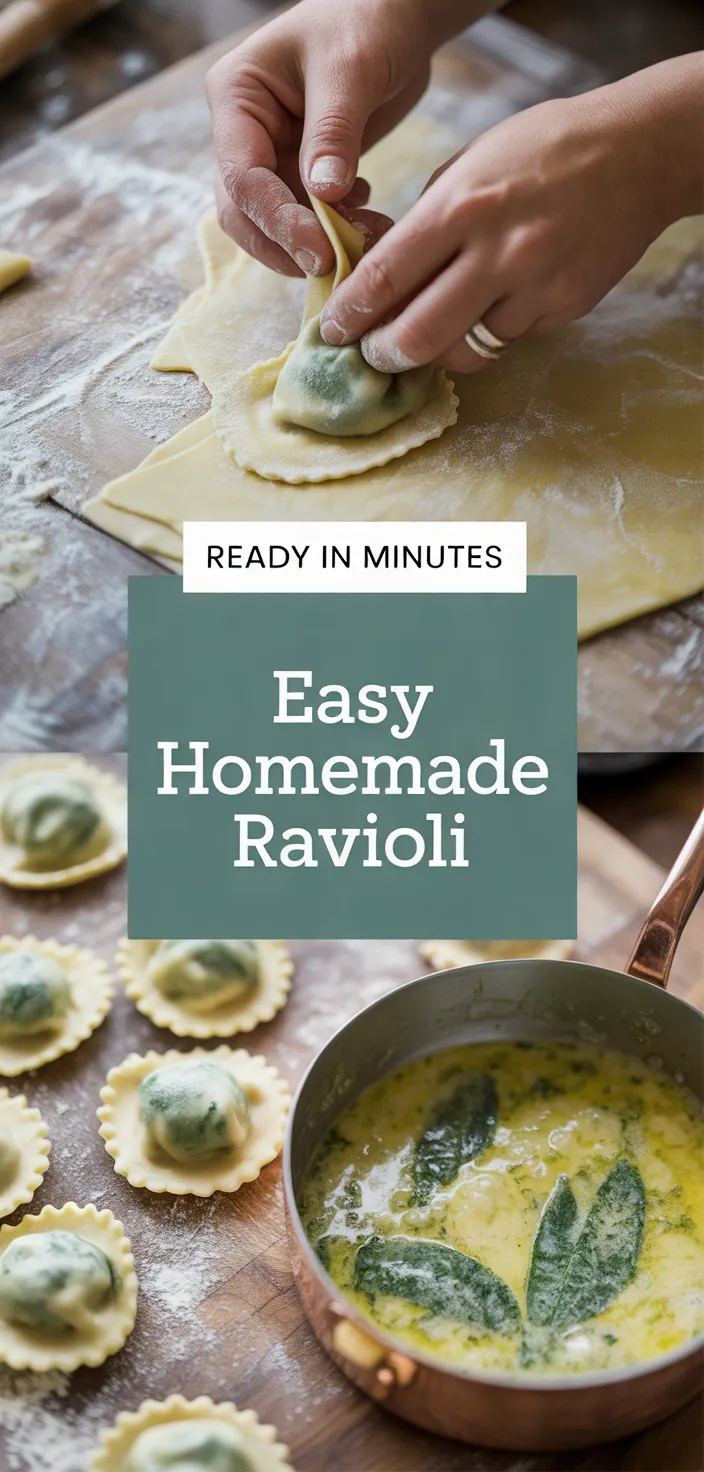
I’m obsessed with homemade ravioli because it tastes like I actually cared, without turning dinner into a drama. Thin pasta, creamy ricotta, spinach tucked inside, and that first bite with butter and sage?
Absolutely worth the flour on my shirt. I love making a big batch because future me gets to pull out real Italian dinner on a random Tuesday and act like I planned my life.
But honestly, I make it for Sundays, holidays, and those nights when boxed pasta just feels rude. Tender, rich, a little messy, and ridiculously satisfying.
And yes, I always go back for more.
Ingredients
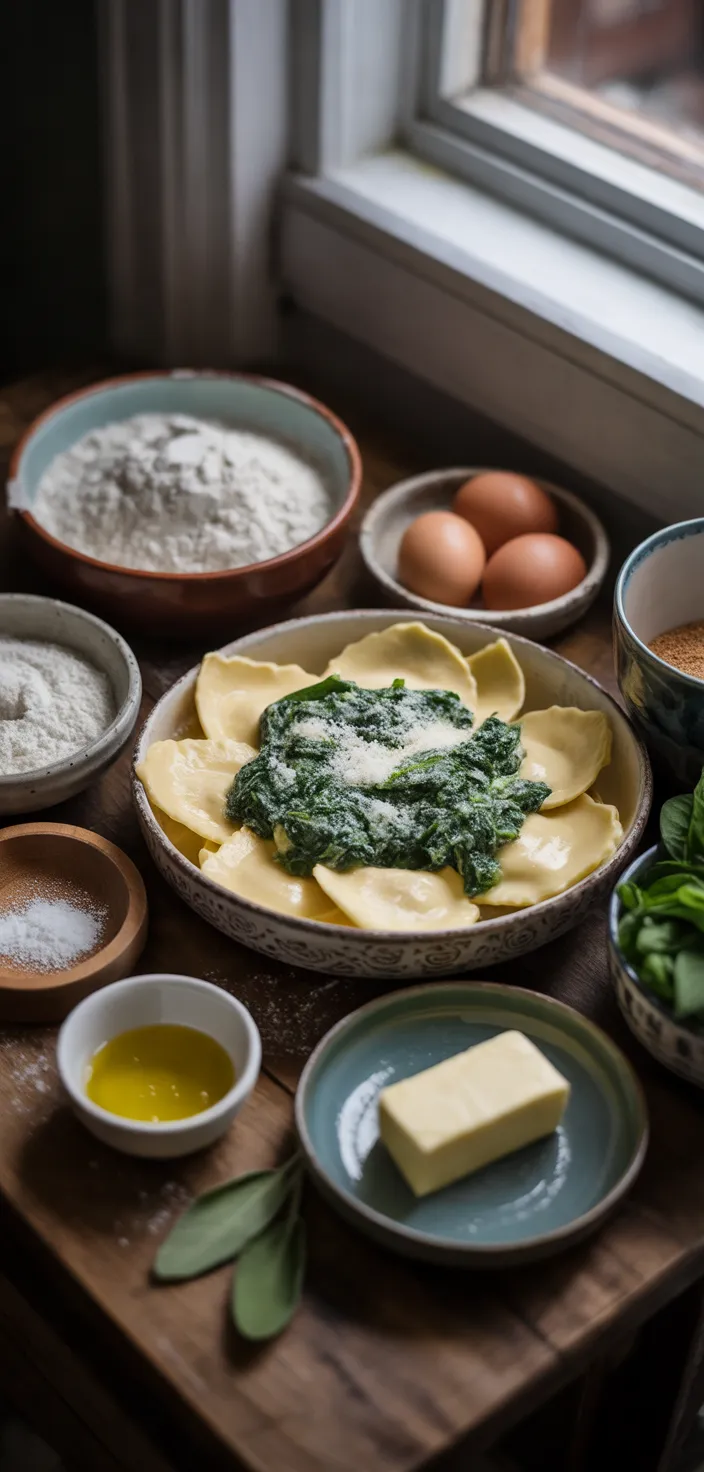
- All-purpose flour makes the dough soft, sturdy, and easy to roll.
- Semolina keeps things from sticking and adds a tiny rustic bite.
- Eggs give the pasta richness, color, and that homemade chew.
- Olive oil helps the dough feel smoother, especially if you’re new to pasta.
- Salt wakes up the dough so it doesn’t taste flat.
- Ricotta makes the filling creamy, mild, and super comforting.
- Spinach adds color, earthiness, and makes it feel a little healthy.
- Parmesan brings salty, nutty flavor that makes the filling pop.
- The filling egg helps everything hold together inside each ravioli.
- Nutmeg sounds fancy, but it’s cozy and classic with ricotta.
- Black pepper adds a gentle kick without taking over.
- Egg wash seals the edges so your filling doesn’t escape.
- Butter and sage make a simple sauce that tastes restaurant-level.
- Plus, lemon zest keeps the butter sauce from feeling too heavy.
- Basically, extra cheese on top is never a bad idea.
Ingredient Quantities
- All-purpose flour 3 cups (about 375 g), plus extra for dusting
- Semolina flour or fine cornmeal 1/2 cup for dusting and preventing sticking
- Large eggs 3 (2 whole eggs plus 1 extra yolk)
- Olive oil 1 tablespoon (optional, for dough elasticity)
- Salt 1 teaspoon for dough
- Whole-milk ricotta 1 pound (about 450 g), drained well
- Frozen spinach 10 ounces (280 g), thawed and very well squeezed dry; or about 6 ounces fresh spinach wilted and squeezed
- Freshly grated Parmesan cheese 1/2 cup (about 50 g), plus extra for serving
- Large egg 1 for the filling (helps bind)
- Freshly grated nutmeg 1/4 teaspoon
- Salt 1/2 teaspoon for the filling, plus more to taste when cooking
- Freshly ground black pepper 1/4 teaspoon, plus more to taste
- Egg wash 1 beaten egg mixed with 1 tablespoon water for sealing ravioli
- Unsalted butter 6 tablespoons for sage butter sauce
- Fresh sage leaves 8 to 12 leaves for the sauce
- Fresh lemon zest 1 teaspoon optional, for brightness in the sauce
- Grated Parmesan or Pecorino Romano for serving about 1/4 cup
How to Make this
1. Make the dough: mound 3 cups all purpose flour on a work surface, make a well, add 2 whole eggs plus 1 extra yolk, 1 tablespoon olive oil if using, and 1 teaspoon salt; gradually incorporate with a fork or your hands until a shaggy dough forms, then knead 8 to 10 minutes until smooth and elastic; wrap and rest 30 minutes at room temperature.
2. Prepare the filling: squeeze excess liquid from 1 pound whole milk ricotta and place in a bowl; add 10 ounces well drained thawed frozen spinach or about 6 ounces wilted fresh spinach, 1/2 cup freshly grated Parmesan, 1 large egg, 1/4 teaspoon freshly grated nutmeg, 1/2 teaspoon salt and 1/4 teaspoon freshly ground black pepper; mix until combined and taste to adjust seasoning.
3. Divide and roll dough: cut rested dough into 4 pieces, keep covered; on a lightly floured surface roll or pass through a pasta machine to about
1.5 to 2 millimeters thickness, dusting with flour as needed so sheets do not stick.
4. Dust and assemble workspace: spread 1/2 cup semolina flour or fine cornmeal on a work surface to prevent sticking; lay one pasta sheet on the semolina, brush small areas with egg wash made from 1 beaten egg and 1 tablespoon water where you will place the filling.
5. Portion filling and form ravioli: place small mounds of filling about 1 teaspoon to 1 tablespoon each depending on desired size, spaced about 1 to
1.5 inches apart; overlay with a second pasta sheet, gently press around each mound to seal the air out, then cut into individual ravioli with a cutter or knife and press edges firmly or crimp with a fork, using extra egg wash on edges if needed.
6. Dry or freeze: transfer ravioli to a semolina dusted tray in a single layer; to freeze, flash freeze on the tray until firm then transfer to a sealed bag for long term storage; otherwise let them dry lightly on the tray 15 to 30 minutes before cooking.
7. Cook frozen or fresh ravioli: bring a large pot of salted water to a rolling boil; add ravioli in batches and cook fresh for about 2 to 4 minutes until they float and are tender, or cook frozen for about 3 to 5 minutes from frozen; taste one to ensure fully cooked, then transfer with a slotted spoon to the sauce.
8. Make sage butter sauce: in a skillet melt 6 tablespoons unsalted butter over medium heat, add 8 to 12 fresh sage leaves and cook until butter foams and turns light golden and nutty, about 2 to 3 minutes; remove or crisp the sage leaves as desired; stir in 1 teaspoon fresh lemon zest if using and season with a pinch of salt and pepper.
9. Finish and serve: gently toss cooked ravioli in the warm sage butter to coat, plate, sprinkle about 1/4 cup grated Parmesan or Pecorino Romano and extra freshly grated Parmesan for serving, garnish with reserved crisped sage leaves and freshly ground black pepper to taste.
Equipment Needed
1. Large mixing bowl
2. Work surface scraper or bench scraper
3. Rolling pin or pasta machine
4. Pasta cutter, sharp knife, or ravioli cutter wheel
5. Small spoon or cookie scoop for portioning filling
6. Pastry brush for egg wash
7. Baking tray or sheet pan dusted with semolina or cornmeal
8. Large pot and slotted spoon for cooking and draining ravioli
9. Skillet for making sage butter sauce
FAQ
Homemade Ravioli Pasta (Easy Step By Step Guide) Recipe Substitutions and Variations
- Semolina flour or fine cornmeal for dusting: use fine polenta, extra all purpose flour, or 00 flour lightly for dusting to prevent sticking.
- Whole-milk ricotta: substitute part-skim ricotta drained well, creamy cottage cheese blended until smooth, or soft goat cheese for a tangier filling (adjust salt).
- Frozen spinach: use fresh baby spinach wilted and squeezed dry, chopped Swiss chard or kale blanched and well drained; reduce tougher greens cooking time until tender.
- Unsalted butter for sauce: use browned salted butter and omit added salt, or use equal olive oil with a few extra sage leaves crisped in the oil for a lighter, dairy free option.
Pro Tips
1. Let the dough relax fully after kneading and before rolling. A 30 minute rest at room temperature makes it much easier to roll thin without springing back, so you get silky sheets with less effort and fewer tears.
2. Dry the ricotta very well and taste the filling before you portion it. Squeeze the ricotta and spinach until nearly dry, then adjust salt, pepper and nutmeg. A slightly saltier filling reads better once the pasta and butter are added.
3. Remove air pockets when sealing each raviolo and use just enough egg wash. Press gently from the center out toward the edges to push air out, and use a small dab of egg wash only where needed so the pasta seals without becoming soggy.
4. Cook in small batches and finish in the sauce. Boil a few at a time so the water temperature stays high and they do not stick together. Transfer directly from the pot into the warm sage butter and toss briefly so the sauce clings to each piece before plating.
Homemade Ravioli Pasta (Easy Step By Step Guide) Recipe
I can never resist a tray of tender spinach and ricotta ravioli, especially when they’re finished in silky sage butter. Homemade, freezer-friendly, and worthy of Sunday dinner or Christmas, these little pasta parcels always disappear fast.
4
servings
850
kcal
Equipment: 1. Large mixing bowl
2. Work surface scraper or bench scraper
3. Rolling pin or pasta machine
4. Pasta cutter, sharp knife, or ravioli cutter wheel
5. Small spoon or cookie scoop for portioning filling
6. Pastry brush for egg wash
7. Baking tray or sheet pan dusted with semolina or cornmeal
8. Large pot and slotted spoon for cooking and draining ravioli
9. Skillet for making sage butter sauce
Ingredients
-
All-purpose flour 3 cups (about 375 g), plus extra for dusting
-
Semolina flour or fine cornmeal 1/2 cup for dusting and preventing sticking
-
Large eggs 3 (2 whole eggs plus 1 extra yolk)
-
Olive oil 1 tablespoon (optional, for dough elasticity)
-
Salt 1 teaspoon for dough
-
Whole-milk ricotta 1 pound (about 450 g), drained well
-
Frozen spinach 10 ounces (280 g), thawed and very well squeezed dry; or about 6 ounces fresh spinach wilted and squeezed
-
Freshly grated Parmesan cheese 1/2 cup (about 50 g), plus extra for serving
-
Large egg 1 for the filling (helps bind)
-
Freshly grated nutmeg 1/4 teaspoon
-
Salt 1/2 teaspoon for the filling, plus more to taste when cooking
-
Freshly ground black pepper 1/4 teaspoon, plus more to taste
-
Egg wash 1 beaten egg mixed with 1 tablespoon water for sealing ravioli
-
Unsalted butter 6 tablespoons for sage butter sauce
-
Fresh sage leaves 8 to 12 leaves for the sauce
-
Fresh lemon zest 1 teaspoon optional, for brightness in the sauce
-
Grated Parmesan or Pecorino Romano for serving about 1/4 cup
Directions
- Make the dough: mound 3 cups all purpose flour on a work surface, make a well, add 2 whole eggs plus 1 extra yolk, 1 tablespoon olive oil if using, and 1 teaspoon salt; gradually incorporate with a fork or your hands until a shaggy dough forms, then knead 8 to 10 minutes until smooth and elastic; wrap and rest 30 minutes at room temperature.
- Prepare the filling: squeeze excess liquid from 1 pound whole milk ricotta and place in a bowl; add 10 ounces well drained thawed frozen spinach or about 6 ounces wilted fresh spinach, 1/2 cup freshly grated Parmesan, 1 large egg, 1/4 teaspoon freshly grated nutmeg, 1/2 teaspoon salt and 1/4 teaspoon freshly ground black pepper; mix until combined and taste to adjust seasoning.
- Divide and roll dough: cut rested dough into 4 pieces, keep covered; on a lightly floured surface roll or pass through a pasta machine to about
- 5 to 2 millimeters thickness, dusting with flour as needed so sheets do not stick.
- Dust and assemble workspace: spread 1/2 cup semolina flour or fine cornmeal on a work surface to prevent sticking; lay one pasta sheet on the semolina, brush small areas with egg wash made from 1 beaten egg and 1 tablespoon water where you will place the filling.
- Portion filling and form ravioli: place small mounds of filling about 1 teaspoon to 1 tablespoon each depending on desired size, spaced about 1 to
- 5 inches apart; overlay with a second pasta sheet, gently press around each mound to seal the air out, then cut into individual ravioli with a cutter or knife and press edges firmly or crimp with a fork, using extra egg wash on edges if needed.
- Dry or freeze: transfer ravioli to a semolina dusted tray in a single layer; to freeze, flash freeze on the tray until firm then transfer to a sealed bag for long term storage; otherwise let them dry lightly on the tray 15 to 30 minutes before cooking.
- Cook frozen or fresh ravioli: bring a large pot of salted water to a rolling boil; add ravioli in batches and cook fresh for about 2 to 4 minutes until they float and are tender, or cook frozen for about 3 to 5 minutes from frozen; taste one to ensure fully cooked, then transfer with a slotted spoon to the sauce.
- Make sage butter sauce: in a skillet melt 6 tablespoons unsalted butter over medium heat, add 8 to 12 fresh sage leaves and cook until butter foams and turns light golden and nutty, about 2 to 3 minutes; remove or crisp the sage leaves as desired; stir in 1 teaspoon fresh lemon zest if using and season with a pinch of salt and pepper.
- Finish and serve: gently toss cooked ravioli in the warm sage butter to coat, plate, sprinkle about 1/4 cup grated Parmesan or Pecorino Romano and extra freshly grated Parmesan for serving, garnish with reserved crisped sage leaves and freshly ground black pepper to taste.
Notes
- Below you’ll find my best estimate of this recipe’s nutrition facts. Treat the numbers as a guide rather than a rule—great food should nourish both body and spirit. Figures are approximate, and the website owner assumes no liability for any inaccuracies in this recipe.
Nutrition Facts
- Serving Size: 320g
- Total number of serves: 4
- Calories: 850kcal
- Fat: 53g
- Saturated Fat: 27g
- Trans Fat: 0.4g
- Polyunsaturated: 2.5g
- Monounsaturated: 15g
- Cholesterol: 290mg
- Sodium: 1060mg
- Potassium: 540mg
- Carbohydrates: 76g
- Fiber: 4.3g
- Sugar: 3.9g
- Protein: 35g
- Vitamin A: 5000IU
- Vitamin C: 15mg
- Calcium: 465mg
- Iron: 3.6mg