
I never knew homemade pizza could have crisp, blistered edges, a chewy center, and airy bubbles that rival my favorite pizzeria. This artisan dough is the secret behind every slice.

I’m obsessed with this artisan pizza dough because it gives me that pizzeria bite without the delivery box drama. The edges blister and crackle, the middle stays chewy, and those big bubbly pockets make every slice feel like I scored the good table on a Friday night.
I love how bread flour brings that sturdy, stretchy texture, while fine sea salt keeps the flavor sharp and honest. But the real reason I keep coming back?
The crust has attitude. Crisp, chewy, airy, a little wild.
And when it hits the oven, I know dinner is about to get seriously loud.
Ingredients
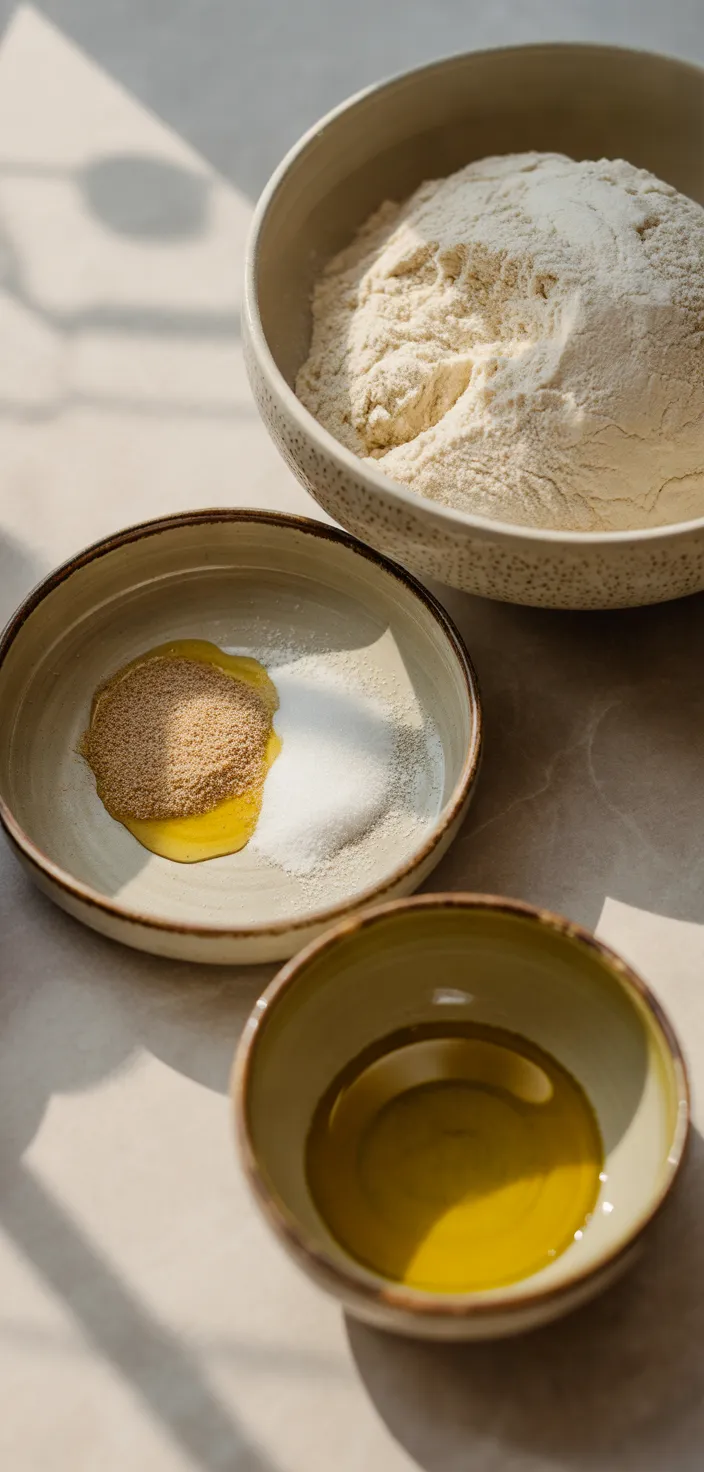
- Bread flour gives the dough chew, strength, and that legit pizzeria-style bite.
- Lukewarm water wakes everything up and helps the dough turn soft and stretchy.
- Fine sea salt adds flavor, so the crust doesn’t taste flat or boring.
- Instant yeast brings the rise, making the dough airy instead of dense.
- Active dry yeast works too, just a little slower and still totally reliable.
- Olive oil makes the crust tender, golden, and a bit richer.
- Plus, olive oil can help the edges crisp up nicely in the oven.
- Sugar gives yeast a snack, which can help the dough puff better.
- Honey does the same thing, with a tiny bit of cozy sweetness.
- Basically, these simple ingredients build a crust that’s chewy, crisp, and homemade.
Ingredient Quantities
- 500 grams (about 4 cups) bread flour
- 350 milliliters (about 1 1/2 cups) lukewarm water
- 2 teaspoons (about 10 grams) fine sea salt
- 1 teaspoon (about 4 grams) instant dry yeast (or 1 1/4 teaspoons active dry yeast)
- 1 tablespoon (15 milliliters) extra virgin olive oil (optional)
- 1 teaspoon sugar or honey (optional, helps yeast)
How to Make this
1. In a large bowl combine 500 g bread flour and 2 teaspoons fine sea salt; stir to distribute the salt evenly.
2. In a separate jug mix 350 ml lukewarm water, 1 teaspoon instant dry yeast (or 1 1/4 teaspoons active dry yeast), and 1 teaspoon sugar or honey if using; let sit 2 to 5 minutes if using active dry yeast to proof.
3. Make a well in the flour and pour in the water and yeast mixture plus 1 tablespoon extra virgin olive oil if using.
4. Using a wooden spoon or your hand, mix until a shaggy dough forms and no dry flour patches remain, about 1 to 2 minutes.
5. Turn the dough onto a lightly floured surface and knead for 8 to 10 minutes until smooth, elastic, and slightly tacky. Alternatively use a stand mixer with a dough hook for 6 to 8 minutes on low speed.
6. Shape the dough into a ball and place it in a lightly oiled bowl, turning once to coat. Cover with plastic wrap or a damp cloth and let rise at room temperature until doubled, about 1 to 2 hours depending on warmth.
7. For best flavor and texture, gently deflate the dough, divide into 2 to 4 portions depending on pizza size, shape each into tight balls, place on a tray, cover, and refrigerate for 12 to 72 hours for cold fermentation.
8. When ready to use, remove dough from the refrigerator and let come to room temperature for 30 to 60 minutes.
9. On a lightly floured surface, stretch or roll each dough ball into a rimmed pizza round, leaving a slightly thicker edge to form a crust and creating some airy pockets by handling gently.
10. Top as desired and bake on a preheated pizza stone or very hot baking sheet in the hottest oven possible (250 to 300 C or 475 to 550 F) until crust is golden and bubbly, about 6 to 12 minutes depending on temperature.
Equipment Needed
1. Large mixing bowl
2. Liquid measuring jug or measuring cup
3. Digital kitchen scale (or measuring cups)
4. Wooden spoon or silicone spatula
5. Bench scraper or knife for dividing dough
6. Stand mixer with dough hook (optional)
7. Plastic wrap or a clean damp cloth
8. Pizza stone or heavy baking sheet
9. Pizza peel or flat baking tray for transferring pizzas
FAQ
Artisan Pizza Dough Recipe Substitutions and Variations
- Bread flour: substitute with all-purpose flour plus 1 to 2 tablespoons vital wheat gluten per 500 g for similar chew, or use 00 flour for a silkier, slightly softer crust.
- Lukewarm water: use room temperature beer for a subtle malt flavor and extra lift, or use chilled sparkling water to increase lightness and bubbles in the crumb.
- Instant dry yeast: replace with active dry yeast at 1 1/4 teaspoons, or use 15 to 30 grams of mature sourdough starter and extend fermentation time for flavor complexity.
- Extra virgin olive oil: swap with melted butter for richer flavor and browning, or omit entirely for a crisper, more traditional Neapolitan-style crust.
Pro Tips
1. Resist overflouring the work surface. A light dusting prevents sticking but too much flour will dry the dough and make the crust dense. If the dough feels sticky, use a bench scraper and minimal flour on your hands only when necessary.
2. Warmth matters for rise but not too hot. Aim for a room around 22 to 24 C for the first rise to develop good flavor. If your kitchen is chilly, place the bowl near a warm oven or on top of it after it is turned off, not in direct heat.
3. Cold ferment if you can. Refrigerating the shaped dough for 24 to 72 hours builds deeper flavor and a more complex crumb. Before shaping, let the dough relax at room temperature for about 30 to 60 minutes so it stretches more easily and yields bigger air pockets.
4. Handle the dough gently when forming the crust. Pressing or rolling too hard knocks out the air you worked to create. Use your fingertips and gravity to coax it outward, leaving a slightly thicker rim so you get an airy, blistered edge.
5. Preheat your stone or baking sheet for at least 45 minutes and use the highest oven temperature you can safely manage. A very hot surface gives that quick oven spring and charred bubbles similar to wood fired pizza. If your oven has a broil setting, switch to broil for the last 30 to 60 seconds to encourage extra blistering, watching closely so it does not burn.
Artisan Pizza Dough Recipe
I never knew homemade pizza could have crisp, blistered edges, a chewy center, and airy bubbles that rival my favorite pizzeria. This artisan dough is the secret behind every slice.
10
servings
196
kcal
Equipment: 1. Large mixing bowl
2. Liquid measuring jug or measuring cup
3. Digital kitchen scale (or measuring cups)
4. Wooden spoon or silicone spatula
5. Bench scraper or knife for dividing dough
6. Stand mixer with dough hook (optional)
7. Plastic wrap or a clean damp cloth
8. Pizza stone or heavy baking sheet
9. Pizza peel or flat baking tray for transferring pizzas
Ingredients
-
500 grams (about 4 cups) bread flour
-
350 milliliters (about 1 1/2 cups) lukewarm water
-
2 teaspoons (about 10 grams) fine sea salt
-
1 teaspoon (about 4 grams) instant dry yeast (or 1 1/4 teaspoons active dry yeast)
-
1 tablespoon (15 milliliters) extra virgin olive oil (optional)
-
1 teaspoon sugar or honey (optional, helps yeast)
Directions
- In a large bowl combine 500 g bread flour and 2 teaspoons fine sea salt; stir to distribute the salt evenly.
- In a separate jug mix 350 ml lukewarm water, 1 teaspoon instant dry yeast (or 1 1/4 teaspoons active dry yeast), and 1 teaspoon sugar or honey if using; let sit 2 to 5 minutes if using active dry yeast to proof.
- Make a well in the flour and pour in the water and yeast mixture plus 1 tablespoon extra virgin olive oil if using.
- Using a wooden spoon or your hand, mix until a shaggy dough forms and no dry flour patches remain, about 1 to 2 minutes.
- Turn the dough onto a lightly floured surface and knead for 8 to 10 minutes until smooth, elastic, and slightly tacky. Alternatively use a stand mixer with a dough hook for 6 to 8 minutes on low speed.
- Shape the dough into a ball and place it in a lightly oiled bowl, turning once to coat. Cover with plastic wrap or a damp cloth and let rise at room temperature until doubled, about 1 to 2 hours depending on warmth.
- For best flavor and texture, gently deflate the dough, divide into 2 to 4 portions depending on pizza size, shape each into tight balls, place on a tray, cover, and refrigerate for 12 to 72 hours for cold fermentation.
- When ready to use, remove dough from the refrigerator and let come to room temperature for 30 to 60 minutes.
- On a lightly floured surface, stretch or roll each dough ball into a rimmed pizza round, leaving a slightly thicker edge to form a crust and creating some airy pockets by handling gently.
- Top as desired and bake on a preheated pizza stone or very hot baking sheet in the hottest oven possible (250 to 300 C or 475 to 550 F) until crust is golden and bubbly, about 6 to 12 minutes depending on temperature.
Notes
- Below you’ll find my best estimate of this recipe’s nutrition facts. Treat the numbers as a guide rather than a rule—great food should nourish both body and spirit. Figures are approximate, and the website owner assumes no liability for any inaccuracies in this recipe.
Nutrition Facts
- Serving Size: 87g
- Total number of serves: 10
- Calories: 196kcal
- Fat: 1.35g
- Saturated Fat: 0.2g
- Trans Fat: 0g
- Polyunsaturated: 0.15g
- Monounsaturated: 1g
- Cholesterol: 0mg
- Sodium: 390mg
- Potassium: 54mg
- Carbohydrates: 38.4g
- Fiber: 1.7g
- Sugar: 0.4g
- Protein: 6.5g
- Vitamin A: 0IU
- Vitamin C: 0mg
- Calcium: 7.5mg
- Iron: 0.6mg