I can never resist this golden, pillowy rosemary focaccia with its crisp edges, fragrant topping, and salty finish. One slice is never enough, and there’s a simple reason this loaf disappears so fast.
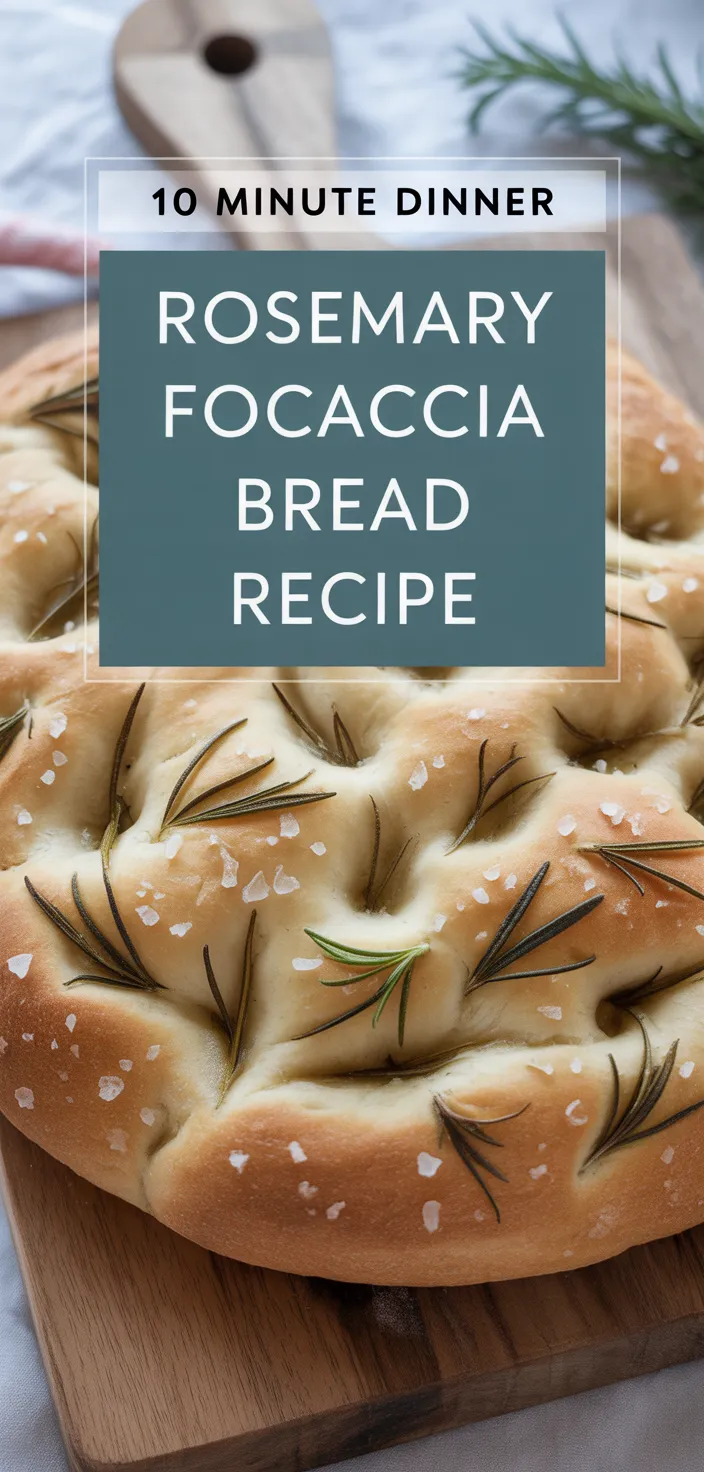
I’m obsessed with rosemary focaccia because it hits that rare bread sweet spot: chewy edges, pillowy middle, and those little dimples that catch all the good stuff. Fresh rosemary brings this sharp, piney bite that makes the whole loaf smell ridiculous, while flaky sea salt gives every piece that salty crunch I keep reaching for.
And yes, I absolutely tear off corners before it ever gets to the table. This is the kind of bread I want next to soup, salad, pasta, or honestly nothing at all.
Just a slab, a plate, and zero plans to share with anyone tonight.
Ingredients
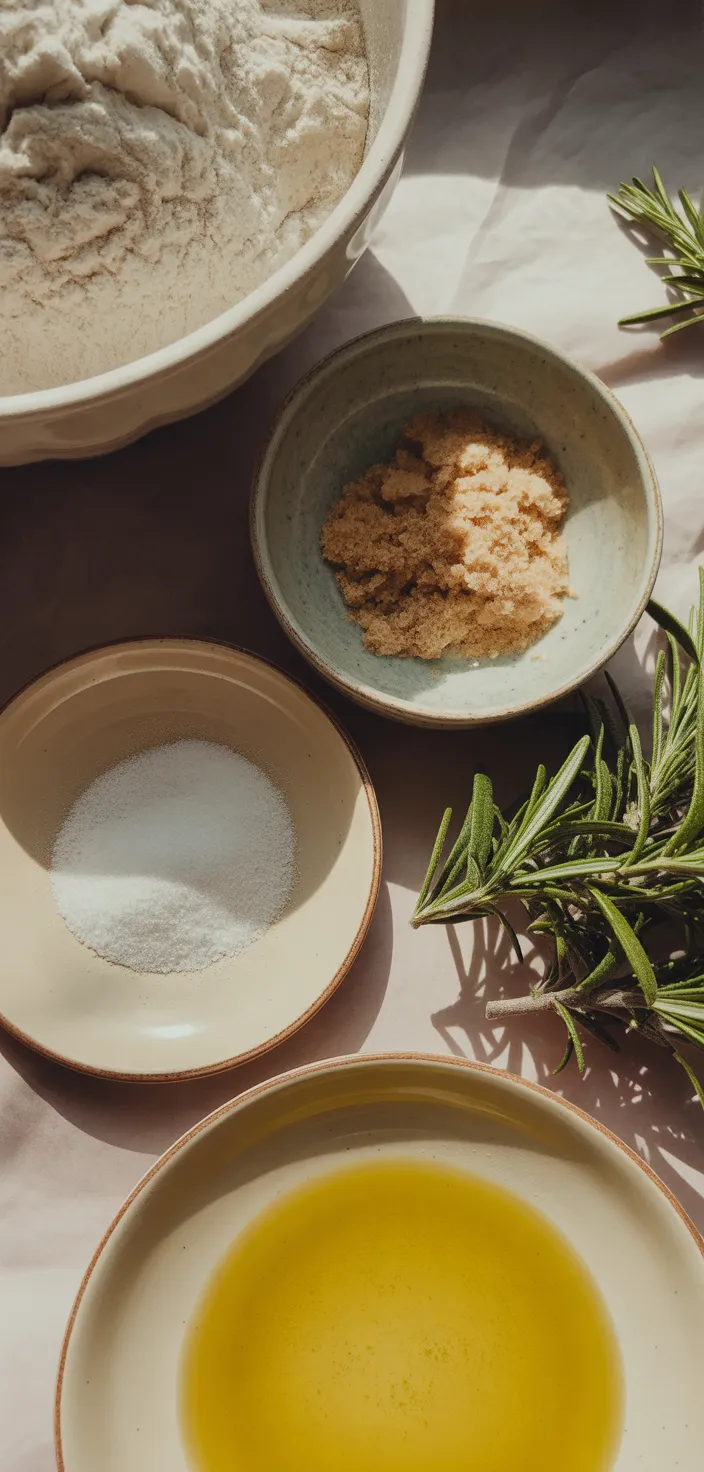
- All purpose flour gives focaccia its soft, chewy body and golden edges.
- Active dry yeast brings the rise, making it airy instead of dense.
- Granulated sugar wakes up the yeast and adds the tiniest mellow sweetness.
- Fine sea salt seasons the dough so it doesn’t taste flat.
- Warm water helps the yeast get moving, like a cozy little jumpstart.
- Extra virgin olive oil makes it rich, tender, and honestly pretty snackable.
- Fresh rosemary adds that woodsy, herby smell you’ll notice right away.
- Flaky sea salt gives the top a salty crunch, basically the best bite.
- Plus, extra oil in the pan helps those crispy, golden bottom bits happen.
Ingredient Quantities
- 3 1/2 cups (420 g) all purpose flour
- 1 packet (2 1/4 teaspoons) active dry yeast
- 1 teaspoon granulated sugar
- 1 1/2 teaspoons fine sea salt
- 1 cup (240 ml) warm water, about 100 to 110 F
- 1/4 cup (60 ml) extra virgin olive oil, plus 2 to 3 tablespoons for drizzling
- 2 tablespoons fresh rosemary leaves, roughly chopped, plus extra sprigs for topping
- 1 to 2 teaspoons flaky sea salt for sprinkling on top
- Optional: additional olive oil for the pan and more rosemary for garnish
How to Make this
1. In a large bowl sprinkle the yeast and sugar over warm water (100 to 110 F) and let sit 5 to 10 minutes until foamy.
2. Whisk in 1/4 cup extra virgin olive oil, 1 1/2 teaspoons fine sea salt and 2 tablespoons chopped fresh rosemary.
3. Add 3 1/2 cups all purpose flour and mix with a paddle or wooden spoon until a shaggy dough forms.
4. If using a stand mixer, switch to the dough hook and knead on low 5 to 7 minutes until smooth and elastic. Optional hand method: turn dough onto a lightly floured surface and knead 8 to 10 minutes until smooth and elastic.
5. Lightly oil a clean bowl, place the dough inside, cover with plastic wrap or a damp towel and let rise in a warm spot about 1 to 1 1/2 hours until doubled.
6. Generously oil a 9×13 inch or similar baking pan with olive oil and transfer the risen dough to the pan, gently stretching and pressing it to fit. If it resists, let it rest 5 minutes and try again.
7. Use your fingertips to dimple the dough all over, drizzle 2 to 3 tablespoons olive oil evenly on top, tuck extra rosemary sprigs or sprinkle chopped rosemary across the surface.
8. Cover and let rise a second time 20 to 30 minutes until puffy. Meanwhile preheat the oven to 425 F.
9. Sprinkle 1 to 2 teaspoons flaky sea salt over the top and bake 20 to 25 minutes until deep golden brown and the bottom sounds hollow when tapped.
10. Remove from the oven, let cool slightly in the pan, then transfer to a rack. Drizzle more olive oil if desired, garnish with extra rosemary, slice and serve warm.
Equipment Needed
1. Large mixing bowl
2. Measuring cups and spoons
3. Instant read thermometer or candy thermometer
4. Whisk
5. Wooden spoon or paddle attachment for mixing
6. Stand mixer with dough hook or clean work surface for hand kneading
7. 9×13 inch baking pan, oiled
8. Plastic wrap or clean damp kitchen towel
9. Oven and oven mitts
10. Cooling rack
FAQ
Rosemary Focaccia Bread Recipe Substitutions and Variations
- All purpose flour: substitute with 1) bread flour for more chew (use same weight), 2) 00 flour for a slightly softer crumb (same weight), or 3) a blend of 3 cups all purpose plus 1/2 cup whole wheat (expect a bit denser loaf).
- Active dry yeast: substitute with instant yeast (use 25% less by weight and mix directly into flour) or with 1 packet rapid-rise yeast (use same volume, skip proofing).
- Extra virgin olive oil: substitute with light olive oil for a milder flavor, or with avocado oil for a neutral taste and similar mouthfeel; melted butter can be used for a richer flavor (use same volume).
- Fresh rosemary: substitute with 1) 2 teaspoons dried rosemary (crush before using), 2) 1 tablespoon fresh thyme or oregano for a different herb note, or 3) a mix of chopped sage and parsley for an autumnal twist.
Pro Tips
1. Proof the yeast in water that feels warm but not hot to the inside of your wrist. If it is too cool the yeast will be sluggish, and if it is too hot you can kill it. Waiting for a foamy top is the best sign that fermentation is underway.
2. Generously oil the pan and the surface of the dough. That olive oil not only prevents sticking but gives the crust those glossy, crisp pockets that make focaccia irresistible. If the dough resists stretching, let it rest 5 to 10 minutes and try again so the gluten relaxes.
3. Use your fingertips, not your whole hand, to dimple the dough. Push all the way down to the pan in each press so oil and toppings pool in those holes. If your fingertips keep sticking, lightly oil them rather than flouring, which can dry the surface.
4. Add flaky sea salt and extra rosemary just before baking. The coarse salt stays crunchy and aromatic that way, and a late olive oil drizzle keeps the top from drying out while the interior finishes baking.
5. Cool briefly in the pan, then transfer to a rack to avoid a soggy bottom. Tap the underside: a hollow sound and a deep golden color are your best indicators that it is fully baked.
Rosemary Focaccia Bread Recipe
I can never resist this golden, pillowy rosemary focaccia with its crisp edges, fragrant topping, and salty finish. One slice is never enough, and there’s a simple reason this loaf disappears so fast.
8
servings
297
kcal
Equipment: 1. Large mixing bowl
2. Measuring cups and spoons
3. Instant read thermometer or candy thermometer
4. Whisk
5. Wooden spoon or paddle attachment for mixing
6. Stand mixer with dough hook or clean work surface for hand kneading
7. 9×13 inch baking pan, oiled
8. Plastic wrap or clean damp kitchen towel
9. Oven and oven mitts
10. Cooling rack
Ingredients
-
3 1/2 cups (420 g) all purpose flour
-
1 packet (2 1/4 teaspoons) active dry yeast
-
1 teaspoon granulated sugar
-
1 1/2 teaspoons fine sea salt
-
1 cup (240 ml) warm water, about 100 to 110 F
-
1/4 cup (60 ml) extra virgin olive oil, plus 2 to 3 tablespoons for drizzling
-
2 tablespoons fresh rosemary leaves, roughly chopped, plus extra sprigs for topping
-
1 to 2 teaspoons flaky sea salt for sprinkling on top
-
Optional: additional olive oil for the pan and more rosemary for garnish
Directions
- In a large bowl sprinkle the yeast and sugar over warm water (100 to 110 F) and let sit 5 to 10 minutes until foamy.
- Whisk in 1/4 cup extra virgin olive oil, 1 1/2 teaspoons fine sea salt and 2 tablespoons chopped fresh rosemary.
- Add 3 1/2 cups all purpose flour and mix with a paddle or wooden spoon until a shaggy dough forms.
- If using a stand mixer, switch to the dough hook and knead on low 5 to 7 minutes until smooth and elastic. Optional hand method: turn dough onto a lightly floured surface and knead 8 to 10 minutes until smooth and elastic.
- Lightly oil a clean bowl, place the dough inside, cover with plastic wrap or a damp towel and let rise in a warm spot about 1 to 1 1/2 hours until doubled.
- Generously oil a 9×13 inch or similar baking pan with olive oil and transfer the risen dough to the pan, gently stretching and pressing it to fit. If it resists, let it rest 5 minutes and try again.
- Use your fingertips to dimple the dough all over, drizzle 2 to 3 tablespoons olive oil evenly on top, tuck extra rosemary sprigs or sprinkle chopped rosemary across the surface.
- Cover and let rise a second time 20 to 30 minutes until puffy. Meanwhile preheat the oven to 425 F.
- Sprinkle 1 to 2 teaspoons flaky sea salt over the top and bake 20 to 25 minutes until deep golden brown and the bottom sounds hollow when tapped.
- Remove from the oven, let cool slightly in the pan, then transfer to a rack. Drizzle more olive oil if desired, garnish with extra rosemary, slice and serve warm.
Notes
- Below you’ll find my best estimate of this recipe’s nutrition facts. Treat the numbers as a guide rather than a rule—great food should nourish both body and spirit. Figures are approximate, and the website owner assumes no liability for any inaccuracies in this recipe.
Nutrition Facts
- Serving Size: 97g
- Total number of serves: 8
- Calories: 297kcal
- Fat: 11.74g
- Saturated Fat: 1.57g
- Trans Fat: 0g
- Polyunsaturated: 1.23g
- Monounsaturated: 8.19g
- Cholesterol: 0mg
- Sodium: 438mg
- Potassium: 60mg
- Carbohydrates: 40.4g
- Fiber: 1.42g
- Sugar: 0.5g
- Protein: 5.25g
- Vitamin A: 50IU
- Vitamin C: 1mg
- Calcium: 9mg
- Iron: 0.63mg