I never thought I’d say this, but this rich, silky Ragu Bianco might just outrank classic tomato bolognese. One forkful of that slow cooked white wine, pancetta, lemon, and herb loaded sauce and you’ll see why.
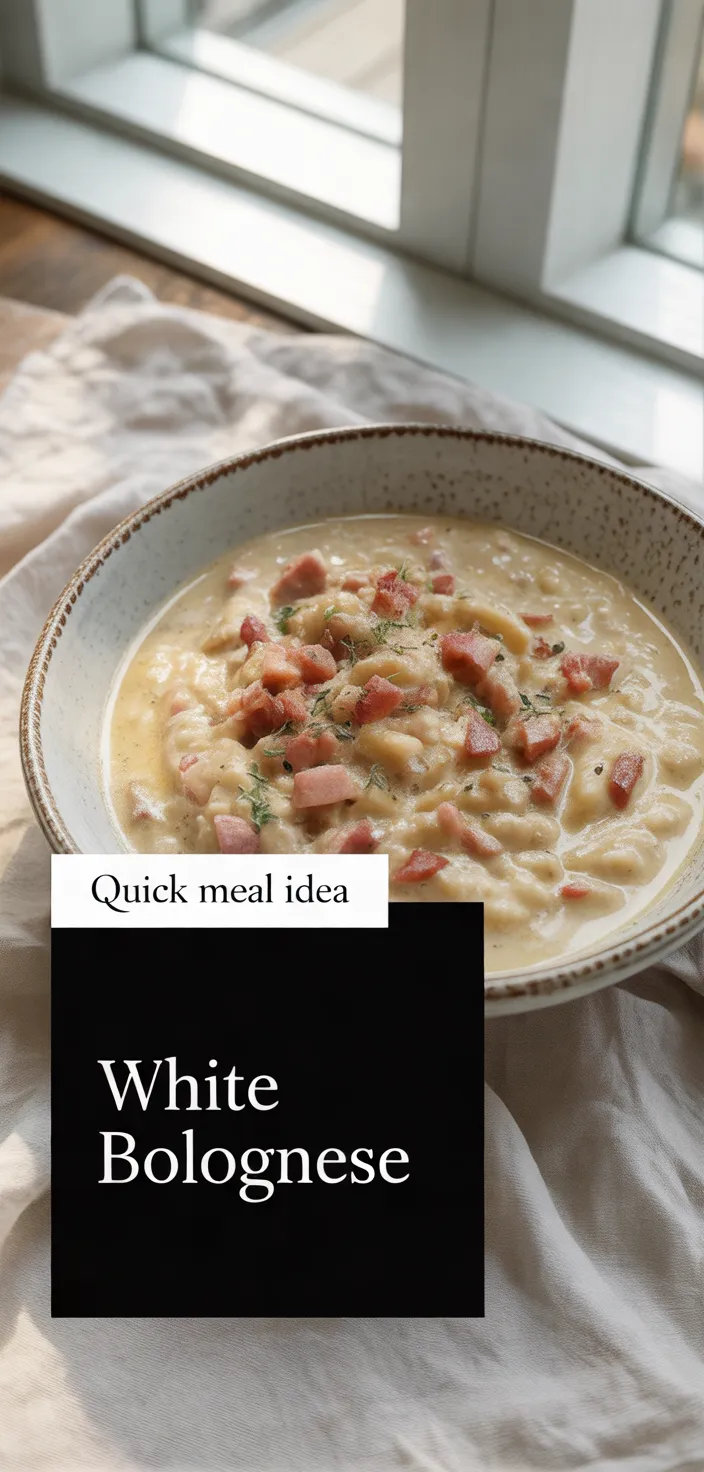
I am wildly obsessed with Ragu Bianco because it hits like bolognese’s richer, silkier cousin, minus the tomato stealing the spotlight. I love how the pancetta brings that salty, meaty punch, while dry white wine keeps everything sharp enough to stop it feeling heavy.
And the sauce. So glossy, savory, and deep that I start “taste testing” straight from the pan like I have no self-control.
I adore it tangled through pasta, clinging to every ribbon, with that slow-cooked meatiness doing all the talking. But honestly, I’d eat it with a spoon and call it dinner.
No regrets at all.
Ingredients
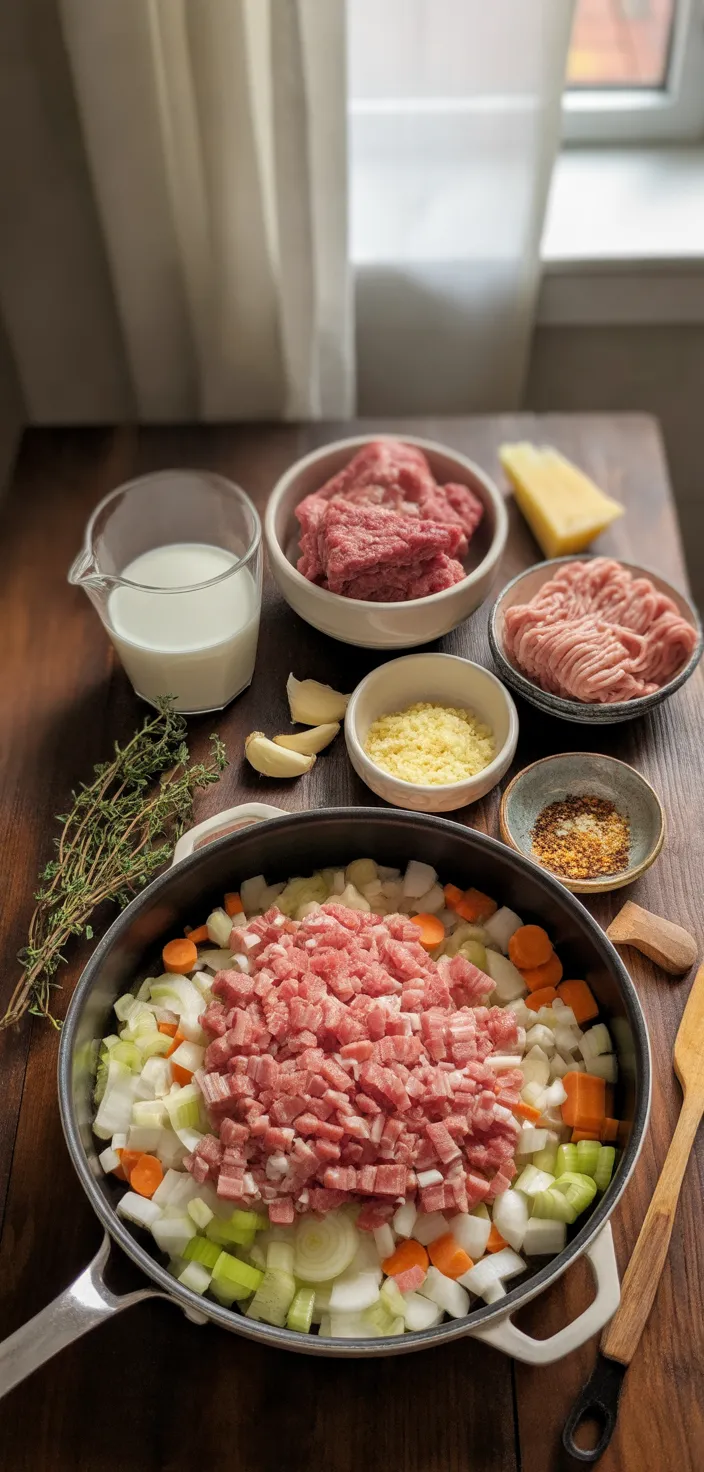
- Olive oil and butter start things off rich, silky, and not too fancy.
- Pancetta brings salty little bites that make the sauce taste slow-cooked fast.
- Onion, carrot, and celery add sweetness, body, and that cozy Sunday smell.
- Garlic gives the whole pot a warm kick without taking over.
- Beef and pork make it hearty, tender, and super satisfying.
- White wine keeps things bright and cuts through the richness a bit.
- Milk makes the sauce creamy and soft, not heavy or gloopy.
- Stock, bay, and thyme build that deep, savory background flavor.
- Lemon zest wakes it up, so it doesn’t taste flat.
- Parmigiano adds salty, nutty depth.
Plus, the rind is gold.
- Black pepper and chili flakes give a tiny edge if you want it.
- Parsley and wide pasta keep it fresh, twirly, and honestly perfect.
Ingredient Quantities
- 2 tablespoons olive oil
- 1 tablespoon unsalted butter
- 100 grams pancetta, finely diced (about 3.5 ounces)
- 1 medium yellow onion, finely chopped (about 150 grams)
- 1 medium carrot, finely chopped (about 70 grams)
- 2 celery stalks, finely chopped (about 80 grams)
- 3 garlic cloves, minced
- 400 grams ground beef (about 14 ounces)
- 200 grams ground pork (about 7 ounces)
- 1 cup dry white wine (240 ml)
- 1 1/2 cups whole milk (360 ml)
- 2 cups low sodium chicken or beef stock (480 ml)
- 1 bay leaf
- 3 sprigs fresh thyme or 1 teaspoon dried thyme
- 1 teaspoon lemon zest, finely grated
- Salt, to taste (start with 1 teaspoon)
- Freshly ground black pepper, to taste
- Pinch of crushed red pepper flakes, optional
- 60 grams Parmigiano Reggiano, plus extra for serving (about 2 ounces; rind optional)
- Fresh parsley, chopped, for garnish (about 2 tablespoons)
- Pasta for serving such as tagliatelle or pappardelle, about 400 grams dried
How to Make this
1. Heat 2 tablespoons olive oil and 1 tablespoon butter in a heavy wide pan over medium heat; add 100 grams pancetta and cook until crisp and fat renders, about 5 minutes.
2. Add 1 finely chopped medium yellow onion, 1 finely chopped medium carrot, and 2 finely chopped celery stalks; sweat until soft and translucent, 6 to 8 minutes, then stir in 3 minced garlic cloves and cook 1 minute.
3. Push the soffritto to the side, increase heat to medium-high and add 400 grams ground beef and 200 grams ground pork; break up and brown thoroughly without overcrowding so fond develops, about 8 to 10 minutes.
4. Pour in 1 cup dry white wine and scrape up any browned bits; simmer until the wine has mostly evaporated and the mixture is relatively dry, 3 to 5 minutes.
5. Stir in 1 1/2 cups whole milk, 2 cups low sodium chicken or beef stock, 1 bay leaf, 3 sprigs fresh thyme or 1 teaspoon dried thyme, and 1 teaspoon finely grated lemon zest; add a pinch of crushed red pepper flakes if using.
6. If you have it, add 60 grams Parmigiano Reggiano rind for extra depth; bring to a gentle simmer, then reduce heat to very low so the sauce barely bubbles.
7. Partially cover and simmer gently for
1.5 to 2 hours, stirring occasionally and breaking up meat, until sauce is thick, silky, and concentrated. Add water or stock if it becomes too dry.
8. Remove bay leaf, thyme stems, and cheese rind; season with salt (start with 1 teaspoon) and freshly ground black pepper to taste, and stir in another 2 tablespoons grated Parmigiano Reggiano if desired.
9. Meanwhile cook about 400 grams dried pasta such as tagliatelle or pappardelle in salted boiling water until al dente; reserve a cup of pasta cooking water, then drain.
10. Toss pasta with the ragu adding a splash of reserved cooking water if needed to coat evenly; serve topped with extra grated Parmigiano Reggiano and chopped fresh parsley.
Equipment Needed
1. Heavy wide sauté pan or skillet (with lid)
2. Large pot for boiling pasta
3. Chef’s knife
4. Cutting board
5. Wooden spoon or silicone spatula
6. Tongs or long pasta fork
7. Measuring cups and spoons
8. Fine grater for Parmigiano and lemon zest
FAQ
Easy Ragu Bianco (White Bolognese Sauce) Recipe Substitutions and Variations
- Pancetta: substitute with finely diced bacon (same weight, yields smokier, saltier flavor; blot excess fat), or use diced prosciutto (similar salt, less fat), or omit and increase butter/olive oil by 1 tablespoon each for fat balance.
- Ground pork: substitute with ground turkey or chicken (same weight, leaner so add 1 tablespoon olive oil), or use additional ground beef (same weight) for a richer, beef-forward sauce, or try ground veal (same weight) for a more classic Bolognese texture.
- Dry white wine: substitute with dry vermouth or dry white vermouth (same volume), or use an equal amount of low-sodium chicken stock plus 1 tablespoon white wine vinegar or 1 teaspoon lemon juice to mimic acidity, or omit and add 1 tablespoon lemon juice later to brighten.
- Whole milk: substitute with half-and-half (same volume, slightly richer), or with full-fat coconut milk (same volume, will add subtle coconut notes), or use a 3 to 1 mixture of low-fat milk and heavy cream to approximate whole milk richness.
Pro Tips
1. Brown in batches and get real fond: Don’t overcrowd the pan when browning the beef and pork. A hot, roomy pan gives you those browned bits that add deep, meaty flavor. If you need to, brown half, remove, then brown the rest and combine.
2. Temper the milk and add slowly: Whisking a little hot sauce into the milk before adding it, or adding the milk in a slow stream while stirring, helps avoid curdling and creates a silkier final texture.
3. Keep the simmer very gentle and be patient: A barely bubbling sauce yields the best texture and concentrated flavor. Check every 20 to 30 minutes, break up any clumps, and add a splash of stock or water if it looks like it might dry out.
4. Finish with pasta water and bright notes: Use starchy reserved pasta water to loosen and bind the ragu to the pasta. Just before serving, fresh lemon zest and a final handful of grated Parmigiano Reggiano will lift the richness and make the dish sing.
Easy Ragu Bianco (White Bolognese Sauce) Recipe
I never thought I’d say this, but this rich, silky Ragu Bianco might just outrank classic tomato bolognese. One forkful of that slow cooked white wine, pancetta, lemon, and herb loaded sauce and you’ll see why.
4
servings
1160
kcal
Equipment: 1. Heavy wide sauté pan or skillet (with lid)
2. Large pot for boiling pasta
3. Chef’s knife
4. Cutting board
5. Wooden spoon or silicone spatula
6. Tongs or long pasta fork
7. Measuring cups and spoons
8. Fine grater for Parmigiano and lemon zest
Ingredients
-
2 tablespoons olive oil
-
1 tablespoon unsalted butter
-
100 grams pancetta, finely diced (about 3.5 ounces)
-
1 medium yellow onion, finely chopped (about 150 grams)
-
1 medium carrot, finely chopped (about 70 grams)
-
2 celery stalks, finely chopped (about 80 grams)
-
3 garlic cloves, minced
-
400 grams ground beef (about 14 ounces)
-
200 grams ground pork (about 7 ounces)
-
1 cup dry white wine (240 ml)
-
1 1/2 cups whole milk (360 ml)
-
2 cups low sodium chicken or beef stock (480 ml)
-
1 bay leaf
-
3 sprigs fresh thyme or 1 teaspoon dried thyme
-
1 teaspoon lemon zest, finely grated
-
Salt, to taste (start with 1 teaspoon)
-
Freshly ground black pepper, to taste
-
Pinch of crushed red pepper flakes, optional
-
60 grams Parmigiano Reggiano, plus extra for serving (about 2 ounces; rind optional)
-
Fresh parsley, chopped, for garnish (about 2 tablespoons)
-
Pasta for serving such as tagliatelle or pappardelle, about 400 grams dried
Directions
- Heat 2 tablespoons olive oil and 1 tablespoon butter in a heavy wide pan over medium heat; add 100 grams pancetta and cook until crisp and fat renders, about 5 minutes.
- Add 1 finely chopped medium yellow onion, 1 finely chopped medium carrot, and 2 finely chopped celery stalks; sweat until soft and translucent, 6 to 8 minutes, then stir in 3 minced garlic cloves and cook 1 minute.
- Push the soffritto to the side, increase heat to medium-high and add 400 grams ground beef and 200 grams ground pork; break up and brown thoroughly without overcrowding so fond develops, about 8 to 10 minutes.
- Pour in 1 cup dry white wine and scrape up any browned bits; simmer until the wine has mostly evaporated and the mixture is relatively dry, 3 to 5 minutes.
- Stir in 1 1/2 cups whole milk, 2 cups low sodium chicken or beef stock, 1 bay leaf, 3 sprigs fresh thyme or 1 teaspoon dried thyme, and 1 teaspoon finely grated lemon zest; add a pinch of crushed red pepper flakes if using.
- If you have it, add 60 grams Parmigiano Reggiano rind for extra depth; bring to a gentle simmer, then reduce heat to very low so the sauce barely bubbles.
- Partially cover and simmer gently for
- 5 to 2 hours, stirring occasionally and breaking up meat, until sauce is thick, silky, and concentrated. Add water or stock if it becomes too dry.
- Remove bay leaf, thyme stems, and cheese rind; season with salt (start with 1 teaspoon) and freshly ground black pepper to taste, and stir in another 2 tablespoons grated Parmigiano Reggiano if desired.
- Meanwhile cook about 400 grams dried pasta such as tagliatelle or pappardelle in salted boiling water until al dente; reserve a cup of pasta cooking water, then drain.
- Toss pasta with the ragu adding a splash of reserved cooking water if needed to coat evenly; serve topped with extra grated Parmigiano Reggiano and chopped fresh parsley.
Notes
- Below you’ll find my best estimate of this recipe’s nutrition facts. Treat the numbers as a guide rather than a rule—great food should nourish both body and spirit. Figures are approximate, and the website owner assumes no liability for any inaccuracies in this recipe.
Nutrition Facts
- Serving Size: 648g
- Total number of serves: 4
- Calories: 1160kcal
- Fat: 62.8g
- Saturated Fat: 24g
- Trans Fat: 0.5g
- Polyunsaturated: 6g
- Monounsaturated: 30g
- Cholesterol: 250mg
- Sodium: 1275mg
- Potassium: 1050mg
- Carbohydrates: 87.5g
- Fiber: 4.5g
- Sugar: 5g
- Protein: 85.5g
- Vitamin A: 1500IU
- Vitamin C: 6mg
- Calcium: 275mg
- Iron: 5mg