I still can’t get over how a few simple ingredients become plump, silky ravioli filled with rich, creamy cheese and ready to steal the spotlight. One bite and you’ll wonder why this wasn’t on your table sooner.
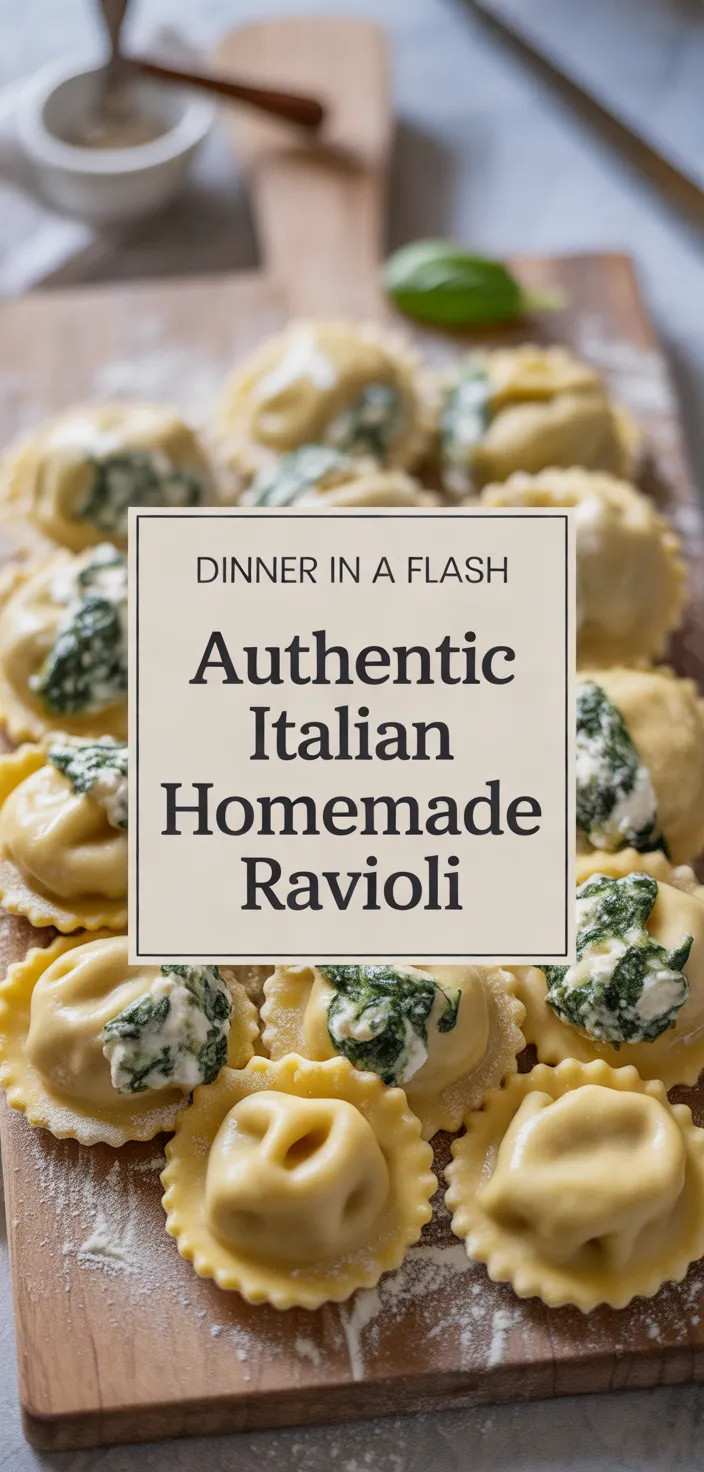
I’m obsessed with homemade ravioli because it tastes like the good stuff I want from an Italian kitchen: tender pasta, rich filling, and that little bite that makes me pause mid-forkful. I love the way Tipo 00 flour turns into silky pasta that still has character, not some limp store-bought square pretending to be special.
And the whole milk ricotta? Creamy, fresh, slightly sweet, exactly why I keep going back for “just one more.” But honestly, it’s the balance I adore most.
Soft edges. Savory middle.
Sauce clinging in all the right places. Real ravioli, made for serious cravings again.
Ingredients
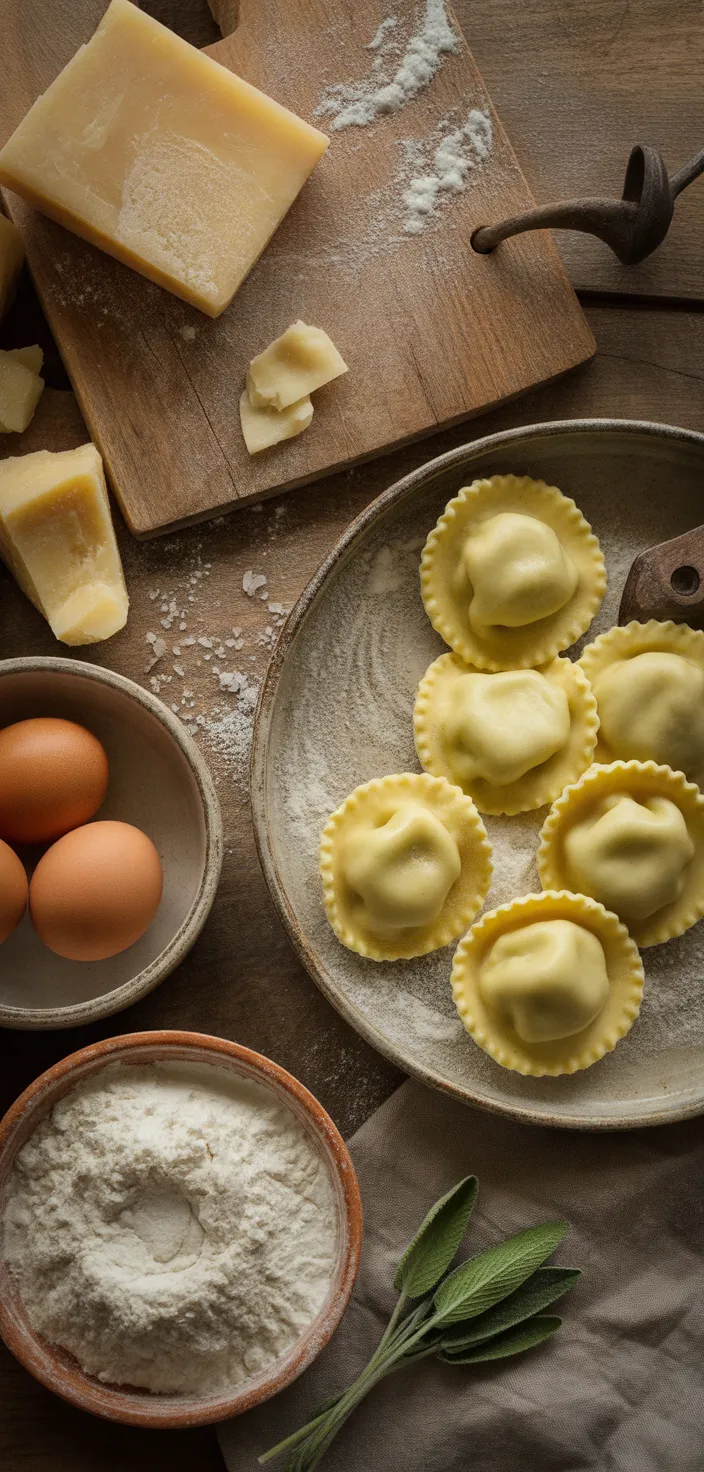
- Tipo 00 flour makes the dough silky and tender, like real-deal Italian pasta.
- Eggs give the pasta richness, color, and that satisfying homemade bite.
- Olive oil helps the dough feel smooth and a little more forgiving.
- Salt keeps the pasta from tasting flat, because bland ravioli is sad.
- Ricotta brings creamy, soft filling that feels cozy without being too heavy.
- Parmigiano Reggiano adds salty, nutty depth.
Basically, it’s the flavor backbone.
- The filling egg helps everything hold together, so it doesn’t spill everywhere.
- Nutmeg adds warmth in the background, not loud, just really good.
- Black pepper gives a tiny kick and balances all that creamy cheese.
- Parsley keeps the filling fresh, green, and not too rich.
- Lemon zest wakes everything up.
Plus, it makes the cheese taste brighter.
- Butter turns glossy and rich, perfect for coating each little pasta pillow.
- Sage adds earthy flavor, especially when it gets crisp in the butter.
- Extra Parm on top? Obviously yes.
It’s salty, savory, and very necessary.
- Coarse salt seasons the pasta water, so the ravioli tastes good inside and out.
Ingredient Quantities
- 2 cups (250 g) Tipo 00 flour or all purpose flour
- 3 large eggs, room temperature
- 1 tablespoon extra virgin olive oil
- 1/2 teaspoon fine salt for the dough
- 1 1/2 cups (about 375 g) whole milk ricotta, well drained
- 1 cup (about 100 g) freshly grated Parmigiano Reggiano or Parmesan
- 1 large egg for the filling
- 1/4 teaspoon freshly grated nutmeg
- 1/2 teaspoon fine salt for the filling, adjust to taste
- 1/4 teaspoon freshly ground black pepper
- 2 tablespoons finely chopped fresh flat leaf parsley
- Zest of 1/2 lemon, optional but recommended
- 6 tablespoons unsalted butter for serving
- 8 to 10 fresh sage leaves for serving, optional
- Additional grated Parmigiano Reggiano for serving
- Coarse salt for boiling the pasta
How to Make this
1. On a clean work surface mound the flour, make a well in the center, crack in 3 eggs, add 1 tablespoon olive oil and 1/2 teaspoon salt, then slowly incorporate the flour into the eggs until a shaggy dough forms.
2. Knead the dough by hand about 8 to 10 minutes until smooth and elastic, form into a ball, wrap in plastic or cover, and rest at room temperature 30 minutes.
3. Meanwhile prepare the filling: press or drain the ricotta well to remove excess moisture, then combine in a bowl with 1 cup grated Parmigiano, 1 large egg, 1/4 teaspoon nutmeg, 1/2 teaspoon salt, 1/4 teaspoon black pepper, 2 tablespoons chopped parsley, and the zest of 1/2 lemon; mix until smooth and tastingly seasoned.
4. Cut the rested dough into 4 pieces, keep pieces covered, and roll each piece thinly with a rolling pin or pasta machine to about 1 to
1.5 millimeters thickness, dusting with flour as needed.
5. Lay one sheet of pasta on a floured surface, place small mounds of filling about 1 to
1.5 teaspoons each spaced 1 to
1.5 inches apart, brush around mounds lightly with beaten egg or water, then place a second sheet over and press gently to seal, pushing out air pockets.
6. Cut into individual ravioli using a knife, pastry wheel, or cutter, pressing edges firmly to seal; crimp edges if desired and set finished ravioli on a lightly floured tray while you repeat with remaining dough and filling.
7. Bring a large pot of water to a rolling boil, add coarse salt, then cook ravioli in batches 2 to 4 minutes depending on size until they float and the pasta is tender but still slightly firm to the bite.
8. While ravioli cook, melt 6 tablespoons unsalted butter in a skillet over medium heat, add 8 to 10 sage leaves and cook until butter turns golden and slightly nutty, then remove from heat.
9. Using a slotted spoon transfer cooked ravioli to the sage butter, gently toss to coat, plate, sprinkle with additional grated Parmigiano and a bit more chopped parsley if desired, then serve immediately.
Equipment Needed
1. Large mixing bowl
2. Clean work surface or pastry board
3. Bench scraper or dough scraper
4. Rolling pin or pasta machine
5. Pastry brush
6. Small spoon or piping bag for filling
7. Ravioli cutter, pastry wheel, or sharp knife
8. Floured tray or baking sheet for resting ravioli
9. Large pot and slotted spoon for boiling and draining
10. Large skillet for sage brown butter and a box grater for Parmigiano
FAQ
Authentic Italian Homemade Ravioli Recipe Substitutions and Variations
- Tipo 00 or all purpose flour: substitute with 00 blended with semolina (75% 00 25% fine semolina) for more bite, or use 100% fine semolina for a firmer pasta texture.
- Whole milk ricotta: substitute with well drained cottage cheese processed smooth, or mascarpone thinned with a little milk for a richer filling, or ricotta salata for a drier, saltier option (reduce added salt).
- Parmigiano Reggiano: substitute with a finely grated aged Pecorino Romano for a sharper, saltier note, or Grana Padano for a milder, similar texture.
- Unsalted butter: substitute with browned butter for a nuttier flavor, olive oil with crisped sage for a lighter finish, or a mix of butter and olive oil to balance richness and smoke point.
Pro Tips
1. Drain the ricotta very well and then let it sit in the fridge for 20 to 30 minutes in a fine mesh sieve or cheesecloth before mixing. Drier filling means less weeping in the ravioli and a firmer, silkier texture when cooked.
2. When rolling the pasta, aim for an even thickness of about 1 to 1.5 millimeters. If you see thin spots, patch them with a bit of dough rather than stretching the sheet. Even sheets seal better and prevent bursts while cooking.
3. Use small, evenly spaced mounds of filling and press out any trapped air thoroughly before sealing. A quick brush of water or beaten egg around the filling helps the sheets bond. If air bubbles remain, prick them with a toothpick to avoid exploding ravioli.
4. Salt the pasta water generously and keep it at a gentle boil. Cook ravioli in small batches so the water temperature does not drop too much. Lift one out to test doneness rather than relying only on float time.
5. For the butter and sage sauce, brown the butter until it smells nutty and turns a light amber, then remove from the heat so it does not burn. Toss the ravioli off the heat in the sauce for a few seconds so the pasta does not overcook, and finish with a sprinkle of lemon zest to brighten the rich flavors.
Authentic Italian Homemade Ravioli Recipe
I still can’t get over how a few simple ingredients become plump, silky ravioli filled with rich, creamy cheese and ready to steal the spotlight. One bite and you’ll wonder why this wasn’t on your table sooner.
4
servings
775
kcal
Equipment: 1. Large mixing bowl
2. Clean work surface or pastry board
3. Bench scraper or dough scraper
4. Rolling pin or pasta machine
5. Pastry brush
6. Small spoon or piping bag for filling
7. Ravioli cutter, pastry wheel, or sharp knife
8. Floured tray or baking sheet for resting ravioli
9. Large pot and slotted spoon for boiling and draining
10. Large skillet for sage brown butter and a box grater for Parmigiano
Ingredients
-
2 cups (250 g) Tipo 00 flour or all purpose flour
-
3 large eggs, room temperature
-
1 tablespoon extra virgin olive oil
-
1/2 teaspoon fine salt for the dough
-
1 1/2 cups (about 375 g) whole milk ricotta, well drained
-
1 cup (about 100 g) freshly grated Parmigiano Reggiano or Parmesan
-
1 large egg for the filling
-
1/4 teaspoon freshly grated nutmeg
-
1/2 teaspoon fine salt for the filling, adjust to taste
-
1/4 teaspoon freshly ground black pepper
-
2 tablespoons finely chopped fresh flat leaf parsley
-
Zest of 1/2 lemon, optional but recommended
-
6 tablespoons unsalted butter for serving
-
8 to 10 fresh sage leaves for serving, optional
-
Additional grated Parmigiano Reggiano for serving
-
Coarse salt for boiling the pasta
Directions
- On a clean work surface mound the flour, make a well in the center, crack in 3 eggs, add 1 tablespoon olive oil and 1/2 teaspoon salt, then slowly incorporate the flour into the eggs until a shaggy dough forms.
- Knead the dough by hand about 8 to 10 minutes until smooth and elastic, form into a ball, wrap in plastic or cover, and rest at room temperature 30 minutes.
- Meanwhile prepare the filling: press or drain the ricotta well to remove excess moisture, then combine in a bowl with 1 cup grated Parmigiano, 1 large egg, 1/4 teaspoon nutmeg, 1/2 teaspoon salt, 1/4 teaspoon black pepper, 2 tablespoons chopped parsley, and the zest of 1/2 lemon; mix until smooth and tastingly seasoned.
- Cut the rested dough into 4 pieces, keep pieces covered, and roll each piece thinly with a rolling pin or pasta machine to about 1 to
- 5 millimeters thickness, dusting with flour as needed.
- Lay one sheet of pasta on a floured surface, place small mounds of filling about 1 to
- 5 teaspoons each spaced 1 to
- 5 inches apart, brush around mounds lightly with beaten egg or water, then place a second sheet over and press gently to seal, pushing out air pockets.
- Cut into individual ravioli using a knife, pastry wheel, or cutter, pressing edges firmly to seal; crimp edges if desired and set finished ravioli on a lightly floured tray while you repeat with remaining dough and filling.
- Bring a large pot of water to a rolling boil, add coarse salt, then cook ravioli in batches 2 to 4 minutes depending on size until they float and the pasta is tender but still slightly firm to the bite.
- While ravioli cook, melt 6 tablespoons unsalted butter in a skillet over medium heat, add 8 to 10 sage leaves and cook until butter turns golden and slightly nutty, then remove from heat.
- Using a slotted spoon transfer cooked ravioli to the sage butter, gently toss to coat, plate, sprinkle with additional grated Parmigiano and a bit more chopped parsley if desired, then serve immediately.
Notes
- Below you’ll find my best estimate of this recipe’s nutrition facts. Treat the numbers as a guide rather than a rule—great food should nourish both body and spirit. Figures are approximate, and the website owner assumes no liability for any inaccuracies in this recipe.
Nutrition Facts
- Serving Size: 263g
- Total number of serves: 4
- Calories: 775kcal
- Fat: 47g
- Saturated Fat: 27.3g
- Trans Fat: 0.2g
- Polyunsaturated: 1.3g
- Monounsaturated: 10.8g
- Cholesterol: 297mg
- Sodium: 1491mg
- Potassium: 311mg
- Carbohydrates: 51.5g
- Fiber: 2.1g
- Sugar: 3.5g
- Protein: 34.3g
- Vitamin A: 1250IU
- Vitamin C: 2mg
- Calcium: 522mg
- Iron: 1.8mg