I’m telling you, if you love Spaghetti All Amatriciana, Gricia is the older, tomato-free cousin that delivers a punch of porky salt and glossy pecorino that clings to every strand and refuses to let go.
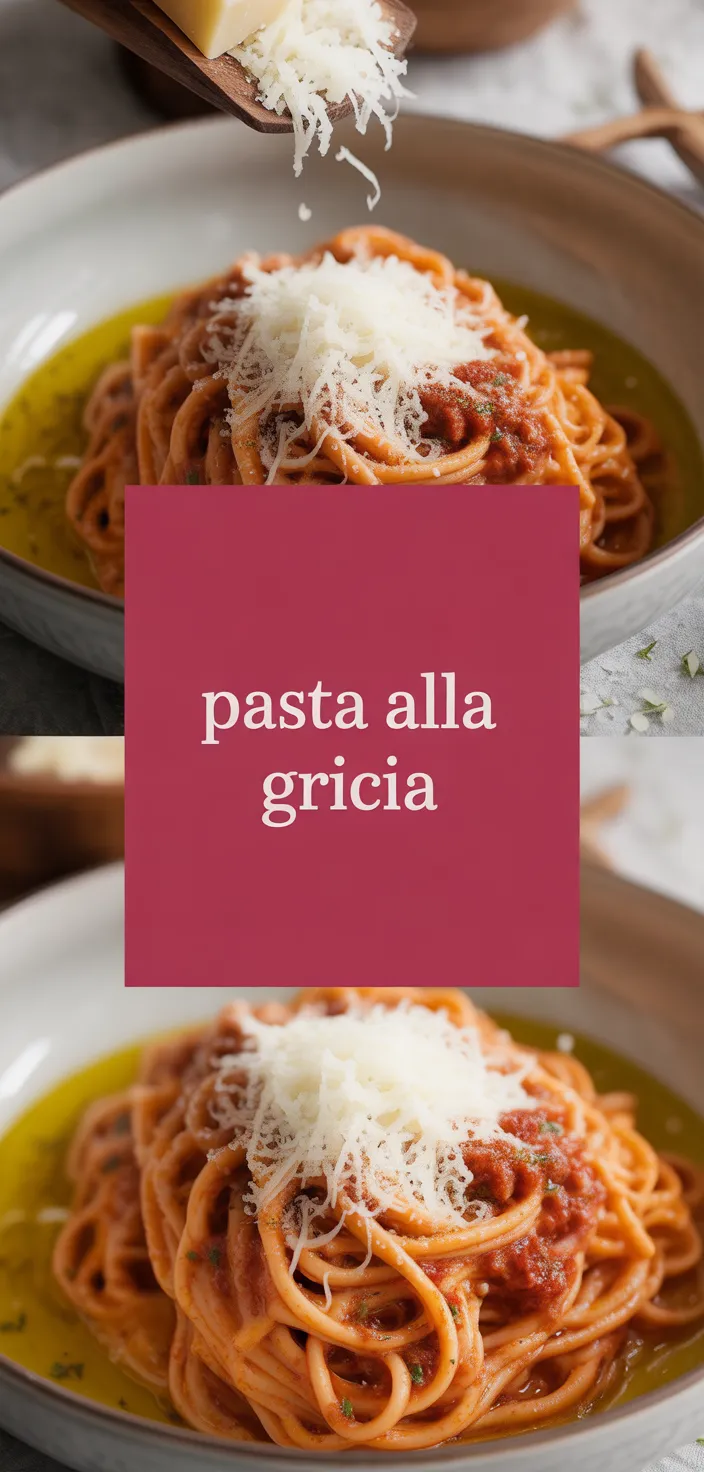
I’m obsessed with Pasta alla Gricia because it hits like honesty on a plate. I love how guanciale gets salty, crisp, and a little wild.
And I adore that sharp Pecorino Romano that snaps through every bite. I don’t buy froufrou Italian Pasta Recipes nonsense; I want rough, loud food with no apologies.
I get hungry thinking about it before I even consider Spaghetti All Amatriciana. I want boldness, not fluff.
I want something that makes me shut up and eat. Pure, simple, relentless flavor.
That’s why Gricia owns my dinner nights. I keep coming back to it, always, unapologetically.
Ingredients
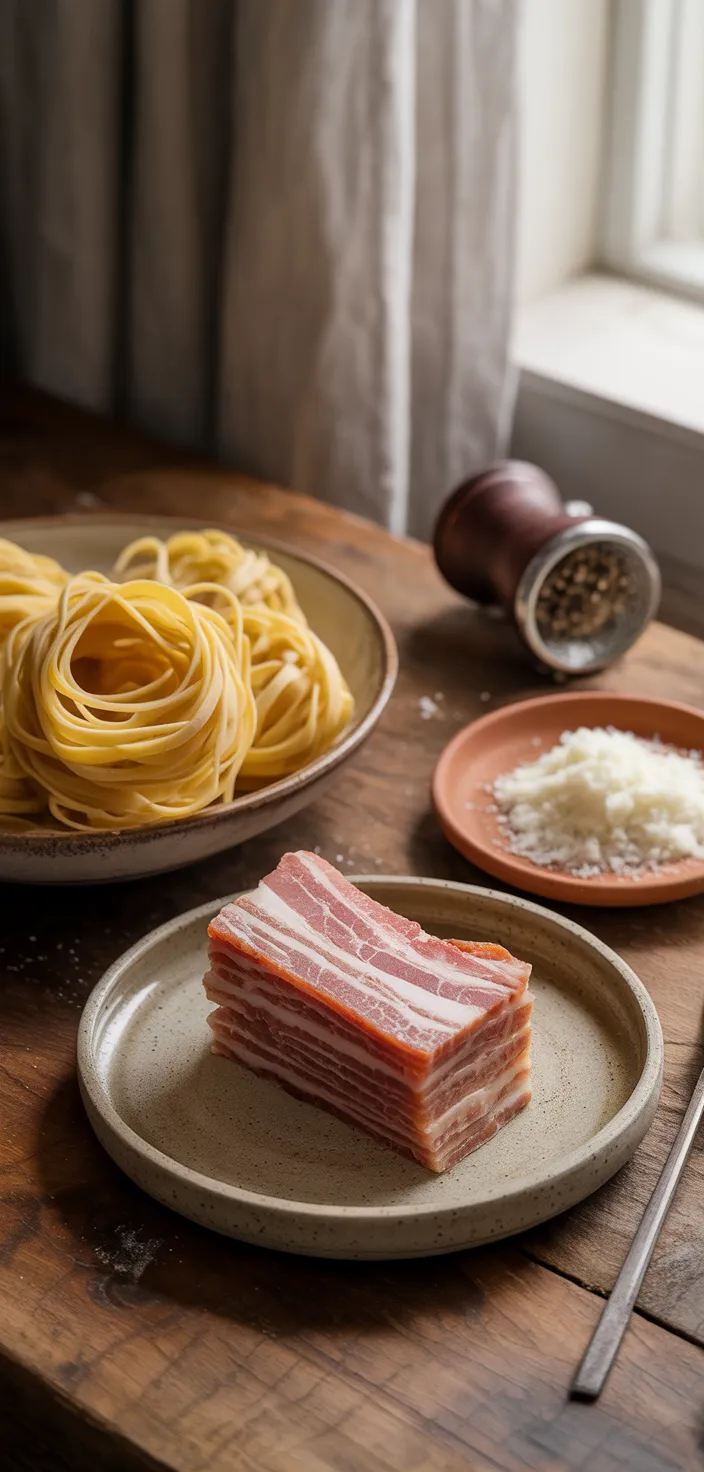
- Basically the starchy base; it soaks up sauce and gives comforting chew.
- Plus the salty, porky crunch; rendered fat makes everything glossy and meaty.
- Sharp Pecorino hugs each strand with salty, tangy creaminess and savory bite.
- Freshly ground black pepper brings bright heat and a little wild kick.
- Salt in the pasta water seasons from the inside; simple, essential, not optional.
Ingredient Quantities
- 400 g spaghetti, rigatoni or bucatini
- 150-200 g guanciale (pork jowl)
- 100 g Pecorino Romano, finely grated
- Freshly ground black pepper, about 1-2 tsp (to taste)
- Salt for the pasta cooking water
How to Make this
1. Cut 150 to 200 g guanciale into 5 to 7 mm strips or small cubes, put them in a cold skillet and turn heat to medium low so the fat can slowly render and the meat gets golden and crisp, do not add oil.
2. While the guanciale renders, bring a large pot of water to a rolling boil, salt it well (it should taste like the sea), then add 400 g spaghetti, rigatoni or bucatini and cook to just shy of al dente according to package time.
3. Keep an eye on the guanciale, stir now and then so it browns evenly, when most fat is rendered and edges are crispy remove about a tablespoon or two of the crispy bits and set aside for topping, keep the fat in the pan.
4. Before draining the pasta, scoop and reserve at least 1 to 1 1/2 cups of the starchy pasta cooking water.
5. Drain the pasta quickly and transfer it straight into the skillet with the warm guanciale fat over low to medium heat, toss gently so the pasta is coated, add a few tablespoons of the reserved pasta water to loosen things up.
6. Off the heat, sprinkle in about 100 g finely grated Pecorino Romano and a generous amount of freshly ground black pepper, toss or shake vigorously while adding more pasta water a little at a time until a creamy, silky sauce forms and clings to the pasta, don’t add the cheese while the pan is too hot or it will clump.
7. Taste and adjust with more pasta water or cheese for creaminess and salt only if needed, remember Pecorino is salty so be careful.
8. Plate the pasta, scatter the reserved crispy guanciale bits on top, finish with another grind of black pepper and a light dusting of Pecorino if you like.
9. Serve immediately while hot, simple, comforting and honest, it’s best eaten right away.
Equipment Needed
1. Large heavy skillet or frying pan (cold-started for the guanciale)
2. Large stockpot for boiling the pasta
3. Colander or pasta strainer for draining
4. Tongs or long pasta fork to transfer and toss the pasta
5. Spoon or small ladle to scoop and reserve pasta cooking water
6. Microplane or fine grater for the Pecorino Romano
7. Mixing bowl or wide plate to finish tossing off the heat (optional but handy)
FAQ
Pasta Alla Gricia (Authentic Italian Recipe) Substitutions and Variations
- Guanciale: Pancetta (closest flavor), thick-cut smoked bacon (more smoky, less pork jowl fattiness), pork belly (richer, needs longer crisping), or roasted mushrooms for a vegetarian twist.
- Pecorino Romano: Parmigiano-Reggiano (milder, nuttier), Grana Padano (smoother), or a salty aged Manchego if you want a different sheep’s milk note.
- Pasta (spaghetti/rigatoni/bucatini): Bucatini keeps the sauce in the hole, rigatoni holds bits of cheese and pepper well, linguine or fettuccine for a slightly broader bite, or a good quality gluten-free pasta if needed.
- Black pepper: Coarsely cracked black pepper for big bite, white pepper for subtler heat, or a pinch of crushed red pepper flakes if you like some heat.
Pro Tips
1) Render the guanciale slow and steady on low heat so the fat melts out and the meat gets crunchy without burning. If it starts to spit or darken too fast, turn the heat down. Patience here makes the whole dish.
2) Save more pasta water than you think you need, like 1 to 1 1/2 cups at least. The starchy water is your sauce glue. Add it little by little off the heat until the cheese emulsifies with the fat into a silky coating.
3) Add the Pecorino off the heat and toss hard. If the pan or pasta is too hot the cheese will clump into gluey bits. Use a fork or tongs and give it some elbow grease so the cheese, fat and water marry into a creamy sauce.
4) Be careful with extra salt. Pecorino and guanciale are already salty. Taste before salting and fix balance with more cheese or pasta water, not just salt. A fresh heavy grind of black pepper at the end lifts the whole thing, so don’t skip it.
Pasta Alla Gricia (Authentic Italian Recipe)
I’m telling you, if you love Spaghetti All Amatriciana, Gricia is the older, tomato-free cousin that delivers a punch of porky salt and glossy pecorino that clings to every strand and refuses to let go.
4
servings
687
kcal
Equipment: 1. Large heavy skillet or frying pan (cold-started for the guanciale)
2. Large stockpot for boiling the pasta
3. Colander or pasta strainer for draining
4. Tongs or long pasta fork to transfer and toss the pasta
5. Spoon or small ladle to scoop and reserve pasta cooking water
6. Microplane or fine grater for the Pecorino Romano
7. Mixing bowl or wide plate to finish tossing off the heat (optional but handy)
Ingredients
-
400 g spaghetti, rigatoni or bucatini
-
150-200 g guanciale (pork jowl)
-
100 g Pecorino Romano, finely grated
-
Freshly ground black pepper, about 1-2 tsp (to taste)
-
Salt for the pasta cooking water
Directions
- Cut 150 to 200 g guanciale into 5 to 7 mm strips or small cubes, put them in a cold skillet and turn heat to medium low so the fat can slowly render and the meat gets golden and crisp, do not add oil.
- While the guanciale renders, bring a large pot of water to a rolling boil, salt it well (it should taste like the sea), then add 400 g spaghetti, rigatoni or bucatini and cook to just shy of al dente according to package time.
- Keep an eye on the guanciale, stir now and then so it browns evenly, when most fat is rendered and edges are crispy remove about a tablespoon or two of the crispy bits and set aside for topping, keep the fat in the pan.
- Before draining the pasta, scoop and reserve at least 1 to 1 1/2 cups of the starchy pasta cooking water.
- Drain the pasta quickly and transfer it straight into the skillet with the warm guanciale fat over low to medium heat, toss gently so the pasta is coated, add a few tablespoons of the reserved pasta water to loosen things up.
- Off the heat, sprinkle in about 100 g finely grated Pecorino Romano and a generous amount of freshly ground black pepper, toss or shake vigorously while adding more pasta water a little at a time until a creamy, silky sauce forms and clings to the pasta, don’t add the cheese while the pan is too hot or it will clump.
- Taste and adjust with more pasta water or cheese for creaminess and salt only if needed, remember Pecorino is salty so be careful.
- Plate the pasta, scatter the reserved crispy guanciale bits on top, finish with another grind of black pepper and a light dusting of Pecorino if you like.
- Serve immediately while hot, simple, comforting and honest, it’s best eaten right away.
Notes
- Below you’ll find my best estimate of this recipe’s nutrition facts. Treat the numbers as a guide rather than a rule—great food should nourish both body and spirit. Figures are approximate, and the website owner assumes no liability for any inaccuracies in this recipe.
Nutrition Facts
- Serving Size: 270g
- Total number of serves: 4
- Calories: 687kcal
- Fat: 30.4g
- Saturated Fat: 12.7g
- Trans Fat: 0.2g
- Polyunsaturated: 1.7g
- Monounsaturated: 12.3g
- Cholesterol: 58mg
- Sodium: 1106mg
- Potassium: 586mg
- Carbohydrates: 75g
- Fiber: 3.2g
- Sugar: 1.5g
- Protein: 23.7g
- Vitamin A: 226IU
- Vitamin C: 0mg
- Calcium: 218mg
- Iron: 4.3mg